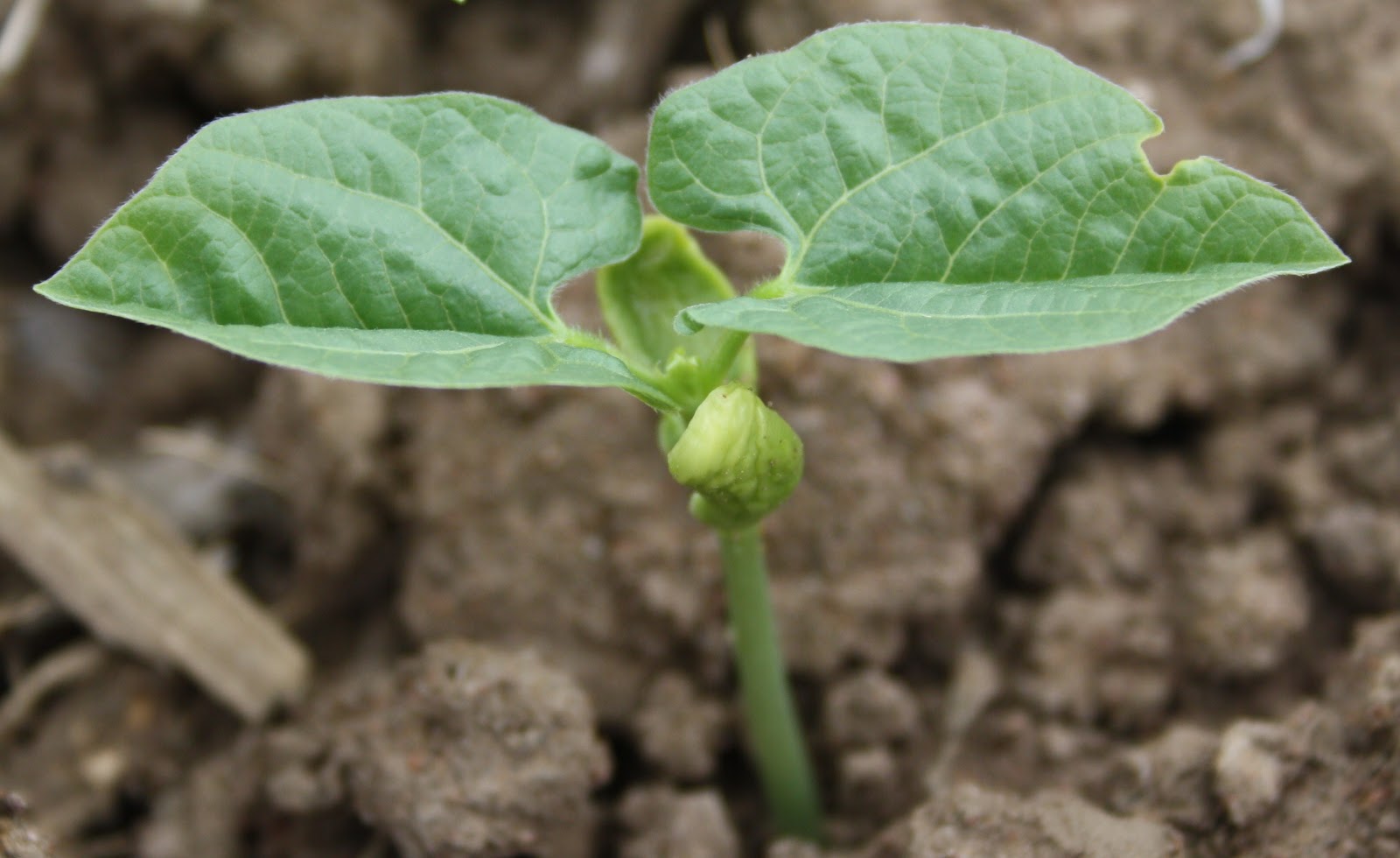
Have a look at the photo below. Generally a poor pasture, not because it's a bad soil type or there isn't enough rain. The good patch in this photo is where a dead kangaroo melted for a while before it was picked up and disposed of. So with an improvement in soil fertility we can significantly increase grass production. There probably aren't enough kangaroos around to do this but it can be replicated with synthetic fertilisers or animal manures.
Tuesday, November 17, 2015
Monday, November 16, 2015
Friday, November 13, 2015
Saturday, March 7, 2015
Sunday, February 15, 2015
Eugene Keeton Passes Away
Eugene Keeton Invented the Keeton Seed Firmer, which is used in place of a press wheel in double disc openers. The videos below show the process he went through to come up with his design.
Eugene Keeton - A true innovator Click here for more
Testing the Seed Firmer - Keeton Travels to Gregg Sauder's Farm
Eugene Keeton - A true innovator Click here for more
Wednesday, February 12, 2014
200 Million Megalitres
I have just been looking at the 8 day rainfall forecast from the BOM - Water and the Land Site. It seems that most of Australia will get around 25mm (1 inch) of rain or more.
Lets assume that Australia averages 25mm over the next week, with almost 8 million square km of land that equates to 200 million mega litres of water! Keep in mind that Australia has a total dam capacity of 80 million mega litres.
Hopefully the people who need it the most will get a decent drop.
Thursday, June 13, 2013
Rain
It's raining, quite a bit. The main road in front of our house has gone quiet. I went to investigate and found that we are flooded in. More to come.....
Monday, December 17, 2012
Rick Bieber - South Dakota
In early 2009 I read an article about Rick Bieber similar to this in the VicNoTill magazine. That article, along with Wayne Smith's article, and our Bairnsdale trials, were my main encouragement to start growing corn. (Yes, I had to be told three times!)
An interesting quote from Rick: "No-till saves time, soil & water; Rotations manage time, soil & water."
Have a look at this video: Rick Bieber Presentation - video It is a little long (1 hr 18 min), however very worth your time, it may make you reconsider your current farming practises.
Other Links:
Rotations in No-till Dryland Farming
Rick dishes the dirt on US crops
Friday, December 7, 2012
Herbicide Tolerant Soybeans
Enlist E3 Soybean Brand Announced
Soybeans tolerant to 2,4-D, glyphosate and glufosinate. Sounds pretty good to me. Why can't they do this for canola? What about chickpeas, field peas, mung beans, etc?
Tuesday, December 4, 2012
Global Warming
Two degrees of warming by 2050 'very difficult' to avoid
I'm still a climate change sceptic, however this article suggests that the warming will be very significant and very soon. 2050 is only 38 years away (as was 1974), but what does 2 degrees mean?
If our average temperature for each month increased by 2 degrees this would have quite significant ramifications for our crops. We would be planting our winter crops maybe one week earlier, but they would be maturing one month earlier. June and July would disappear which should reduce any waterlogging problems, however it would increase the importance of getting our crops in on time. Assuming our rainfall stays the same it would give us less in crop rain, due to a shorter growing season. With good fallow management this shouldn't be a problem.
Our summer would start one month earlier and finish one month later. Our summer crop heat units would increase by 40%. This should make sorghum growing much easier, but also alllow us to get maize in one month earlier. Earlier planting of maize matches our rainfall pattern better. With earlier maturing winter crops and a longer summer, it should increase our double crop options.
I'm still a climate change sceptic, however this article suggests that the warming will be very significant and very soon. 2050 is only 38 years away (as was 1974), but what does 2 degrees mean?
![]() |
| Sale Temperatures with and without climate change |
If our average temperature for each month increased by 2 degrees this would have quite significant ramifications for our crops. We would be planting our winter crops maybe one week earlier, but they would be maturing one month earlier. June and July would disappear which should reduce any waterlogging problems, however it would increase the importance of getting our crops in on time. Assuming our rainfall stays the same it would give us less in crop rain, due to a shorter growing season. With good fallow management this shouldn't be a problem.
Our summer would start one month earlier and finish one month later. Our summer crop heat units would increase by 40%. This should make sorghum growing much easier, but also alllow us to get maize in one month earlier. Earlier planting of maize matches our rainfall pattern better. With earlier maturing winter crops and a longer summer, it should increase our double crop options.
Saturday, December 1, 2012
Summer Legumes
We have planted a number of legumes to see what will grow over our summer. Most of the crops below were planted on the 23rd of November and the photos below were taken on the 30th of November - 7 days after planting. I suspect that mid November is the ideal time for most of these to be planted. When we determine which of these crops are suitable for our climate I'd like to experiment with later planting. I'm looking for a crop that we can plant immediately after harvest in years where we finish harvest with a full profile of moisture.
For most of these crops we will harvest 4 reps, graze 4 reps, brown manure 4 reps and green manure 4 reps.
The plots where the legumes are planted had corn in it last summer and has had a winter fallow with over 300mm from April to October. There is 1m of wet soil and soil temp was 21°C (70°F) at 9:30am on the day of planting.
Soybeans
We have 4 varieties x 4 reps. Purely a variety trial looking for an early maturity variety to suit our climate. Two problems with soybeans. First is that their flowering is daylength sensitive. They won't flower until the days get shorter (after December 22) and then not until the day reaches a certain length, depending on variety. Based soley on daylength a soybean variety that flowers in early January at Wagga would not flower until mid January in Gippsland. Flowering date is also affected by temperature, so flowering would probably be later again. Given that Soybeans haven't been grown in Southern Victoria it is likely that all varieties in Australia are going to be flowering later than optimum.
Second problem with soybeans is our cool nights, we'll just have to wait and see what happens.
LablabA small plot of lablab was grown last year at the trial site, due to inadequate weed control it had to be sprayed out, however it was growing well and showing promise. It is a vigorous grower and should fix a lot of nitrogen.
Cowpeas
Cowpeas have been grown at the trial site before, but only in a very dry summer where they yielded 670Kg/ha. Interesting to see how they go with a full profile of moisture.
Mung and Azuki Beans
Mung and Azukis are not out of the ground yet as they were planted 3 days later than the others. Azukis prefer cooler conditions than mungs. Mung Beans are also known as 'mongrel' beans so we will see how they grow. I've grown some in the vege garden before and hand harvested 1 t/ha.
Chickpeas
We have planted some chickpeas to see how they will go in our summer. Bairnsdale averages 21 days over 30°C (86°F) and 7 days over 35°C (95°F). Most of these occur in Mid January to Mid February. If the chickpeas flower after then they should be alright. Harvesting in the Autumn may be a problem though.
Serradella and Biserulla
Everyone tells me that they won't grow at all planted this late in the spring. They have plenty of moisture under them so I guess heat will be the only problem.
For most of these crops we will harvest 4 reps, graze 4 reps, brown manure 4 reps and green manure 4 reps.
The plots where the legumes are planted had corn in it last summer and has had a winter fallow with over 300mm from April to October. There is 1m of wet soil and soil temp was 21°C (70°F) at 9:30am on the day of planting.
Soybeans
We have 4 varieties x 4 reps. Purely a variety trial looking for an early maturity variety to suit our climate. Two problems with soybeans. First is that their flowering is daylength sensitive. They won't flower until the days get shorter (after December 22) and then not until the day reaches a certain length, depending on variety. Based soley on daylength a soybean variety that flowers in early January at Wagga would not flower until mid January in Gippsland. Flowering date is also affected by temperature, so flowering would probably be later again. Given that Soybeans haven't been grown in Southern Victoria it is likely that all varieties in Australia are going to be flowering later than optimum.
Second problem with soybeans is our cool nights, we'll just have to wait and see what happens.
| Soybeans 7 days after planting |
| Lablab 7 days after planting |
| Lablab 1st leaves unfolding |
| Lablab |
| Something eating Lablab |
Cowpeas have been grown at the trial site before, but only in a very dry summer where they yielded 670Kg/ha. Interesting to see how they go with a full profile of moisture.
| Cowpeas 7 days after planting |
Mung and Azukis are not out of the ground yet as they were planted 3 days later than the others. Azukis prefer cooler conditions than mungs. Mung Beans are also known as 'mongrel' beans so we will see how they grow. I've grown some in the vege garden before and hand harvested 1 t/ha.
| Mung or Azuki Beans 4 days after planting |
We have planted some chickpeas to see how they will go in our summer. Bairnsdale averages 21 days over 30°C (86°F) and 7 days over 35°C (95°F). Most of these occur in Mid January to Mid February. If the chickpeas flower after then they should be alright. Harvesting in the Autumn may be a problem though.
| Chickpeas 7 days after planting |
Everyone tells me that they won't grow at all planted this late in the spring. They have plenty of moisture under them so I guess heat will be the only problem.
| Serradella 7 days after planting |
Chickpea Update
Field Peas
We also have Kaspa field peas. They appear to be doing quite well. It would be interesting to compare field peas and chickpeas over the long term. Field peas should yield more, but chickpeas are worth more.
They would both fit really well planted into a corn stubble. The field peas might tolerate waterlogging better, and the chickpeas would tolerate drought and heat better. Personally, I like the chickpeas as they are something that could capitalise on our November rain, spreading our risk and stretching our harvest window a bit longer.
| Kaspa Field Peas |
Thursday, November 22, 2012
Trial Site Chickpeas
2012 Corn establishment
I have a paddock that was too wet to plant winter crops into so it has been planted to corn. Here are a couple of pictures of the corn.
| Looking north west towards a neighbours late barley crop, the barley is just about to come out in head: |
| Looking south east |
The next photo is some corn on another property (not mine) that is suffering from phosphorus deficiency. You will notice that it mostly affects two rows. These are the centre rows in my planter where I couldn't get the fert openers closer than 100mm from the seed openers due to the three point linkage. The corn here was sown with 100Kg of DAP (90 lb/acre) so there should be enough phosphorus, it's just that the plants haven't found it yet.
| Phosphorus deficient corn - Vam deficient? Long fallow Syndrome |
A soil test taken 5 years ago showed a Colwell P of 75, however it is very acid with a pH of 5.0 (4.2 in CaCl). I think that the problem is related to the previous crop - canola. Canola does not host VAM, vesicular arbuscular mycorrhizae, a beneficial fungi that makes phosphorus and zinc more available to crops like corn and sorghum. Check out this link for more info: http://www.daff.qld.gov.au/26_5395.htm
Sunday, April 29, 2012
Summer crops moving south
Traditionally dryland summer grains have generally only been grown in Northern NSW and Queensland (there have been irrigated summer crops grown in Southern NSW and Northern Victoria for a long time.) With the advent of no-till, summer grain production is now possible (and somewhat beeneficial) in southern areas.Here are some links to three interesting articles that show other farmers who are trialing dryland summer cropsin Southern Australia. I have also included a link to a provocative article by WA agronomist, Wayne Smith: http://www.agronomy.com.au/PDF/WANTFA_No-till_talk_Feb_1999.pdf
Bruce Watson, Parkes, NSW
Schodde family, Murtoa, Vic
Rural Property Management, Evansford, Vic
Bruce Watson, Parkes, NSW
Schodde family, Murtoa, Vic
Rural Property Management, Evansford, Vic
Monday, April 16, 2012
Summer Crops
After sowing spring crops in September, we left 700 acres fallow. Some was still too wet and generally it was just too late to keep sowing. More rain in November meant that it was still too wet to plant summer crops. The paddock below was planted early December on sorghum stubble. We managed to plant another paddock, but had to pull the pin on planting any more. So all up we got 180 acres of maize in.
| Maize on Sorghum Stubble |
My Brother planted some sunflowers in his garden (below). They have grown alright. I was going to put a paddock in, but it got too late. I think they will grow well here. Only three things worry me: birds, weeds and profitability. Apart from that they should be fine.
| Sunflowers at Winnindoo |
Sunday, April 15, 2012
Spring Crops
You can see our rainfall (mm) for 2011 and early 2012 below. Basically we were ready to plant at the start of May and 12mm of rain pulled us up. We got going at the end of June and again in September. One paddock of canola sown early May yielded 2.5 t/ha. Those sown in June were much worse, mainly due to poor establishment due to slugs and wet weather. The September sown canola was similar to June sown with similar establishment problems. Wheat and Barley sown in September had similar establishment problems, some was near perfect and other paddocks were a complete disaster with rain soon after sowing causing seed burst, other paddocks missed the rain but suffered some slug damage.
Apart from establishment difficulties the season was kind for spring crops. We had an exceptionally wet and cool November and December, with barely a day over 25 degrees. The wet weather combined with warm summer temperatures did bring some other problems, namely stem rust in the wheat and caterpillers in the barley. Canola was ready to windrow early January and harvest commenced later in January.
It was interesting to see longer season Gairdner barley outyield shorter season Hindmarsh. I assumed that a quicker maturity variety would be better as it would fill grain earlier when it is cooler. The Gairdner took it's time, tillered well and produced reasonable size heads. The hindmarsh just grew too quick and produced short heads without many tillers. I think that hindmarsh needs to grow in the winter to slow it down and produce a decent yield. Perhaps if the Hindmarsh was planted thicker it would have yielded better; we really need some trials on sowing rate and variety for spring sown crops. I've started a web page about spring cropping.
![]() |
| Toongabbie rainfall, 2011-12 |
It was interesting to see longer season Gairdner barley outyield shorter season Hindmarsh. I assumed that a quicker maturity variety would be better as it would fill grain earlier when it is cooler. The Gairdner took it's time, tillered well and produced reasonable size heads. The hindmarsh just grew too quick and produced short heads without many tillers. I think that hindmarsh needs to grow in the winter to slow it down and produce a decent yield. Perhaps if the Hindmarsh was planted thicker it would have yielded better; we really need some trials on sowing rate and variety for spring sown crops. I've started a web page about spring cropping.
Sorghum Harvest
This post should have been done 6 months ago, but here goes anyway. Winter has been very wet, and we haven't been able to get on paddocks until September. We finished up sowing 2300 acres in early September to canola, barley and wheat. There was 270 acres sown to canola in June and 570 acres left fallow for summer crops. After the spring crops were sown we harvested the sorghum which has been ready for four months. The photo below is my brothers crop. The patch in front of the header is not representive of the paddock. A lot of stalks have fallen over and we've probably lost half the yield.
| Gippsland Sorghum Harvest |
Subscribe to:
Posts (Atom)